June 18, 2026
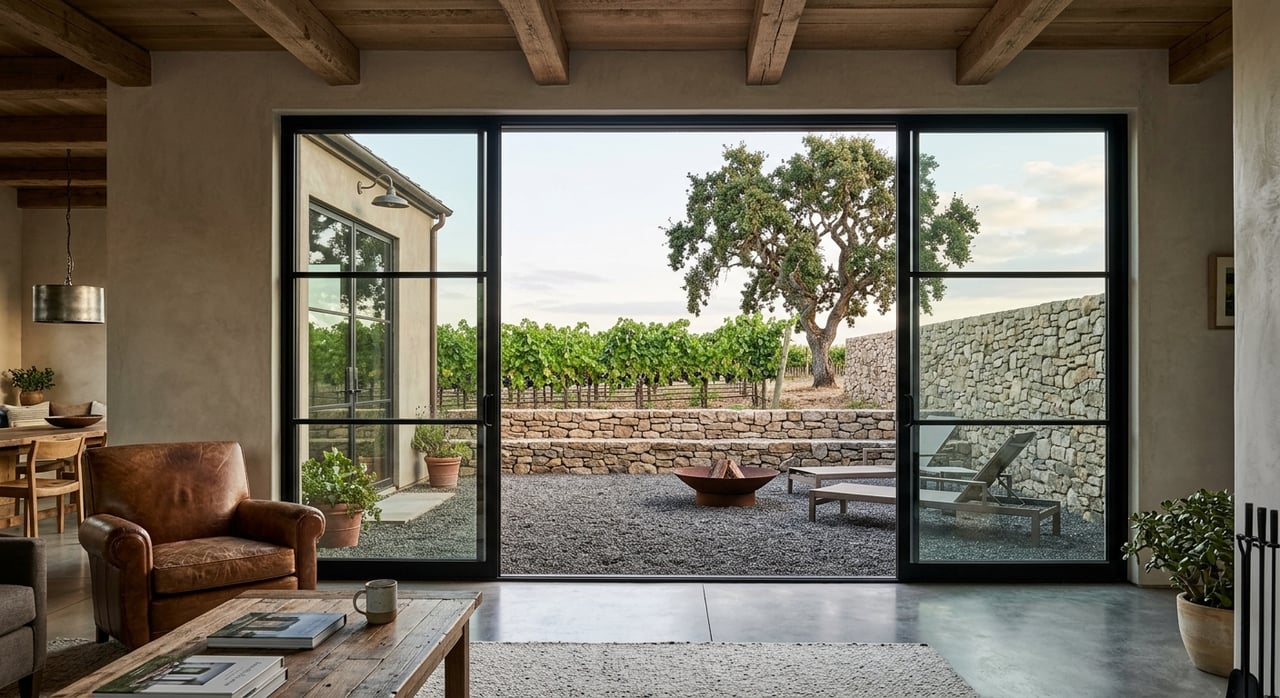
If you are deciding between a home near Healdsburg Plaza and a property on the vineyard edge, you are really choosing between two very different daily experiences. One offers walkable access, city services, and a lively downtown rhythm. The other offers more land, more privacy, and a more rural ownership picture. This guide will help you compare both sides so you can move forward with clarity. Let’s dive in.
Healdsburg’s in-town core centers on the Plaza and the surrounding downtown districts. The City’s planning framework includes areas such as Downtown Commercial, Plaza Retail, Downtown Residential, Grove Street Mixed Use, and a Historic District Overlay, all of which shape a more compact, connected living environment.
Outside city limits, the setting changes quickly. Sonoma County’s land-use framework focuses on agriculture, open space, and scenic beauty in the unincorporated county, which creates a very different backdrop for vineyard-edge living.
If you like the idea of walking to dinner, enjoying local events, and keeping your day flexible, in-town Healdsburg may feel like a natural fit. The Plaza serves as the city’s downtown anchor, and the City programs events there, including weekly summer concerts.
The City also highlights museums, galleries, the Raven Performing Arts Theatre, and recurring community events. Restaurants, tasting rooms, and outdoor recreation are within walking distance or a short drive from the Plaza, which supports a more spontaneous day-to-day lifestyle.
In-town living often works well for buyers who want activity nearby without planning every outing. You may be able to step out for coffee, dinner, or an event with very little coordination.
That convenience does come with a few tradeoffs. Downtown parking includes free city-owned lots and timed street parking, with enforcement seven days a week from 9 a.m. to 6 p.m., so parking awareness becomes part of the routine.
If your ideal wine-country life includes open views, separation from neighbors, and a more estate-style setting, the vineyard edge may be more appealing. Public listings near Healdsburg currently show rural properties described in terms of acreage, privacy, and expansive views.
That difference matters because it affects how your home feels every day. Vineyard-edge living is usually less about walking out to a full social calendar and more about enjoying a quieter, more secluded environment.
A rural property often offers more breathing room and a stronger connection to the land. For many buyers, that is the main draw.
At the same time, errands, dining, and events may require more driving and more planning. Ownership can also involve more land stewardship, which changes the level of time and attention a property may need.
One of the clearest differences between in-town and vineyard-edge living is the housing mix. In town, public listing portals show a wider range of urban-style housing products, including condos, townhomes, single-family homes, multi-family opportunities, and land.
In practical terms, in-town buyers are more likely to encounter condos, townhomes, smaller-lot homes, historic cottages, bungalows, and some mixed-use possibilities. This side of the market typically offers more variety for buyers who want a lower-maintenance footprint or a closer connection to downtown.
Healdsburg’s zoning structure shapes much of the in-town inventory. The City identifies districts such as Downtown Commercial, Service Commercial, Plaza Retail, Downtown Residential, Grove Street Mixed Use, and Historic District Overlay.
The City also notes that accessory dwelling units may be built in any zoning district that allows residential uses. That can be a meaningful point for buyers thinking about guest space or flexible use, though each property still needs review in context.
Historic areas add another layer. The Johnson Street and Matheson Street historic districts are subject to special design guidelines, and exterior changes in those areas generally require design review.
For many buyers, older Healdsburg homes are part of the appeal. The City’s historic-district information notes architectural styles ranging from Homestead and Victorian to Italian Renaissance and other Revival styles.
That character can be a major draw, but it may also mean more oversight when you want to change exterior features. If you love period details and established streetscapes, that may feel like a benefit rather than a burden.
On the vineyard edge, the inventory tends to shift toward larger parcels and more estate-oriented homes. Public listings point to acreage properties, while the county’s land-use framework supports agriculture and open space rather than compact urban infill.
For buyers, that usually means farmhouse-style homes, estate residences, vineyard parcels, and land with agricultural or winery potential. It is a very different property search from the one you would have near the Plaza.
Lifestyle is only part of the decision. The ownership experience can differ in very practical ways, especially when you compare city services with rural systems.
Healdsburg is a full-service city that provides electric, water, and wastewater service to residents and businesses. For in-town owners, that can simplify daily operations and reduce some of the infrastructure questions that come with rural property.
Outside the city core, buyers need to examine utilities much more closely. Sonoma County states that where public sewer is not available, homeowners must have septic systems.
The county’s well guidance also says permits are required for drilling, abandoning, or deepening wells. Permit Sonoma further states that non-emergency well permits are currently suspended under a court order, and county monitoring rules require metering and water-use reporting for many newer wells.
For vineyard-edge buyers, this means water, septic, and permitting should be reviewed early in the process. In some cases, future improvements may depend on whether a well can be permitted, metered, or expanded.
That is why a rural home search in this area is often about more than the house itself. The systems behind the property can be just as important as the setting and architecture.
Neither lifestyle is better across the board. The right fit depends on how you want to live, how much property you want to manage, and how comfortable you are with the practical side of ownership.
If you are drawn to walkability, event access, and a lower-maintenance footprint, in-town living may be the stronger match. If you want privacy, acreage, and a more secluded wine-country setting, the vineyard edge may make more sense.
If you are looking at properties in or near more rural areas, wildfire planning deserves attention. Healdsburg’s official wildfire information states that the city has no very high fire-severity zones.
At the same time, the City also states that roughly 30 percent of residential structures and almost 25 percent of the population are in moderate or high severity zones. The City’s Wildland Urban Interface rules apply to new buildings in moderate and high fire severity zones, so location-specific review is important.
Healdsburg sits in a high-price bracket, but the market spans a broad range of product types. Zillow’s average home value estimate is about $1.12 million, while Realtor.com’s current median listing price is about $1.53 million.
That spread is consistent with a market that includes smaller attached homes in town alongside larger rural estates and land parcels. When you compare options, it helps to think less about one citywide number and more about which property type and setting match your priorities.
Choosing between in-town and vineyard-edge living in Healdsburg is really about choosing the pace, scale, and ownership style that suits you best. If you want a polished downtown rhythm with easier utility access, in-town may be the answer. If you want privacy, land, and a more estate-driven experience, the vineyard edge may be worth the added diligence. When you are ready to weigh specific properties and tradeoffs, Joel Toller can help you evaluate the details with clarity and care.
October 1, 2026
September 24, 2026
September 17, 2026

September 10, 2026
September 3, 2026
August 27, 2026
August 20, 2026
August 13, 2026
August 6, 2026
The Joel Toller Team has a comprehensive understanding of the area to help you buy and sell at the right time for the right price. Let's connect today.