April 16, 2026
What if your daily routine included a walkable main street, vineyard views, public art, and some of Napa Valley’s most recognizable dining destinations? If you are considering a move to Yountville, you are likely looking for more than just a house. You are looking for a lifestyle that feels polished, connected, and distinctly wine country. This guide will help you understand what living in Yountville is really like, from housing and mobility to recreation and the rhythm of a town shaped by both residents and visitors. Let’s dive in.
Yountville has a rare mix of small-town scale and destination-level energy. According to the Town of Yountville, the community is surrounded by vineyards and framed by views of the Mayacamas Mountains and the Napa River, while also emphasizing walkable neighborhoods, open space, local businesses, and year-round events.
That combination is a big part of the appeal. You get a setting that feels scenic and intimate, yet the town remains active and amenity-rich throughout the year. For many buyers, that creates a version of Napa Valley living that feels easy to enjoy day to day.
At the center of town is Washington Street, Yountville’s compact core. Town and visitor materials describe it as a one-mile, walkable main street lined with restaurants, tasting rooms, shops, and public art, creating a true village-style experience rather than a spread-out suburban pattern. You can see that mix reflected in the town’s community brochure and business directory.
For residents, this means many daily outings can feel simple and pleasant. Whether you are heading to a meal, meeting friends, exploring local art, or running a quick errand, the town center supports a more connected pace of life. If you value being able to step out your front door and enjoy the surroundings without a long drive, Yountville offers that in a meaningful way.
One of the most practical questions buyers ask is whether you can live in Yountville without relying heavily on your car. The short answer is that many residents can enjoy a more car-light routine thanks to the town’s compact layout and mobility options.
The town highlights several features that support this lifestyle through its transportation and parking resources. These include the Yountville Bee, a free on-demand electric shuttle, and the Yountville Mile, which is the first segment of the Napa Valley Vine Trail.
That infrastructure matters because it supports more than recreation. It helps make everyday life feel low-stress and accessible, especially if you enjoy walking, biking, or staying close to the heart of town. In a region where many communities are more car-dependent, Yountville offers a different rhythm.
Yountville also delivers strong everyday amenities beyond its dining reputation. The town reports that residents can access 10 parks across 15 acres, along with 5 miles of scenic paths and trails, sports courts, picnic areas, and a dog park.
These features help balance the town’s visitor activity with places that support regular local routines. You have options for a morning walk, a casual afternoon outside, or time with visiting friends and family in attractive public spaces. For buyers looking at lifestyle value, these amenities are an important part of the picture.
Yountville’s public art program is not just a tourist attraction. It is woven into the experience of living here. The Yountville Art Walk includes more than 38 outdoor sculptures, with maps, QR-enabled plaques, a mobile audio tour, and docent-led tours.
Because the artwork is spread throughout town, it becomes part of your normal routine rather than something set apart from it. A simple walk can double as a cultural experience, and that adds texture to day-to-day life. The town also describes the Art Walk as part of Yountville’s pedestrian-friendly atmosphere, reinforcing how closely art and walkability are connected here.
If you are looking for resident-focused amenities, the Yountville Station Library adds another layer of convenience. The town notes that the Yountville Station Library offers books, computers, Wi-Fi, and recurring programs such as book club, storycraft, movie night, art events, and teen programming.
That may seem like a small detail, but it speaks to the town’s everyday livability. In a community known widely for hospitality and culinary appeal, practical local services still matter. They help support a fuller sense of home.
If you are exploring the market, it helps to know that Yountville’s housing stock is more varied than many buyers expect. The town’s 2024 Housing Element states that residents live in single-family homes, duplexes, multifamily buildings, mixed-use apartments, mobile home communities, and group living quarters associated with the Veterans Home and Adventist Home communities.
The same report shows that in 2021, about 62% of housing units were single-family, 8% were 2-to-4-unit multifamily, 8% were 5-plus-unit multifamily, and 23% were mobile homes. It also estimates that 63% of households were owner-occupied and 37% were renter-occupied.
For buyers, this means Yountville offers more than one path into the market. Depending on your goals, you may find opportunities in detached homes, smaller-scale residential options, or properties that support a lower-maintenance lifestyle.
Yountville’s market also reflects a limited supply of housing. The Housing Element reports an effective vacancy rate of about 4.5%, while also noting that many vacant homes are used seasonally or occasionally. The town further explains that limited developable land constrains future growth.
In practical terms, that can create a more competitive environment when the right property becomes available. It also helps explain why buyers who are serious about Yountville often benefit from a well-prepared and highly local approach. In a small market, nuance matters.
For buyers thinking long term, accessory dwelling units may also be part of the conversation. The Housing Element states that ADUs are permitted ministerially in several zones, and the town plans to extend that approach more broadly across residential-use districts.
That can be relevant if you are considering guest space, multigenerational living, or a property with added flexibility. As always, the specific use and development potential of any property should be evaluated case by case. Still, the policy direction is worth noting if future adaptability matters to you.
Yountville is both a hometown and a destination, and it is important to understand that balance before you buy. Town officials state that Yountville has a tourism-based economy and that more than 75% of General Fund revenues come from visitors, as described by the Yountville Chamber of Commerce page.
The town also says it welcomes more than 2 million visitors each year. That visitor activity helps support public services and amenities, but it also shapes the pace and feel of life in town. You should expect a setting that is lively, polished, and public-facing, especially near the core.
For many buyers, that is part of the charm. If you want a quieter, more conventional suburban layout, Yountville may not be the ideal fit. If you want an amenity-dense village with strong food-and-wine identity, it becomes much more compelling.
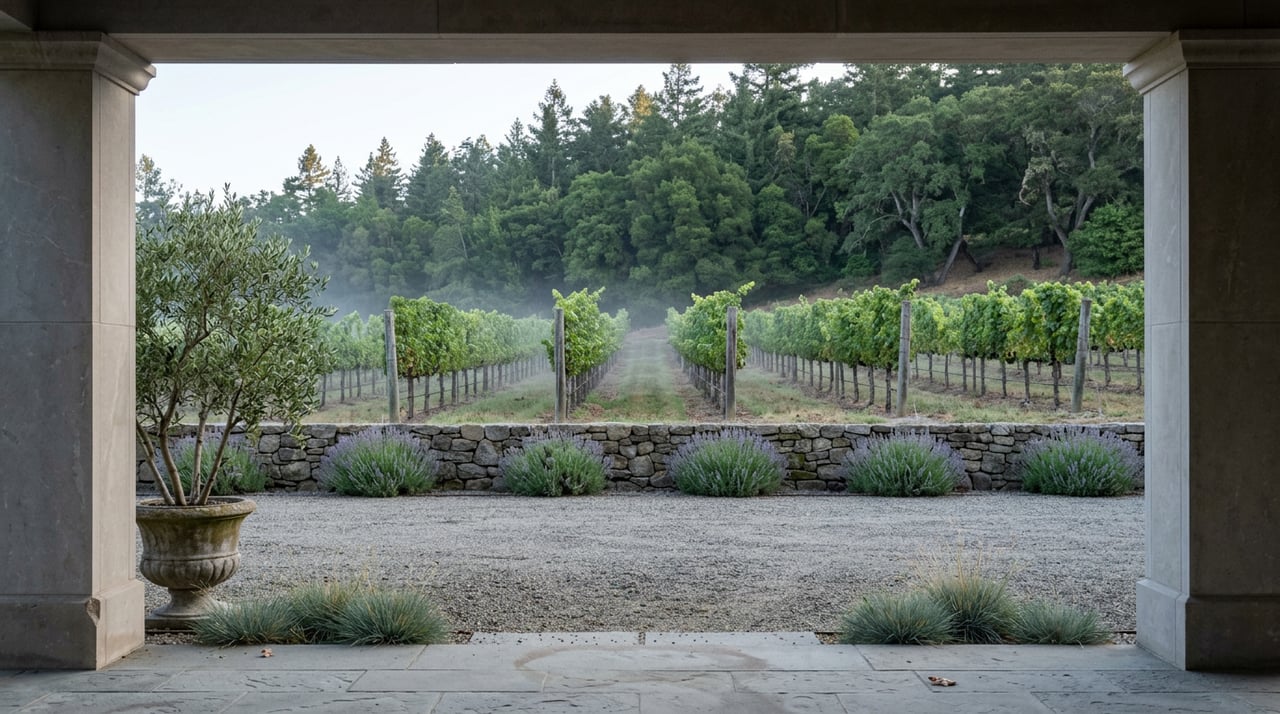
Yountville’s wine country identity is not just branding. It is rooted in the surrounding landscape. Federal materials from the Alcohol and Tobacco Tax and Trade Bureau describe the Yountville area as its own designated viticultural area within Napa Valley, covering about 8,260 acres with roughly 3,500 acres planted to vineyards.
Those same materials characterize Yountville as one of Napa Valley’s cooler vineyard regions, with a long, cool growing season. Combined with the town’s own emphasis on biking through surrounding vineyards in its official brochure, this helps explain why vineyard access feels so close to daily life here.
For buyers drawn to wine country living, that proximity can be a meaningful part of the lifestyle. The landscape is not just scenic. It is integral to how the town feels and functions.
Yountville follows the classic North Bay pattern of dry summers and wetter winters. Based on nearby NOAA climate normals for Calistoga, July and August average around 89°F for daily highs with very little rain, while December and January average roughly 8 inches of precipitation each.
While that data is from a nearby station rather than Yountville itself, it gives you a useful sense of the seasonal pattern. In everyday terms, you can expect warm, dry weather through much of summer and a greener, wetter landscape in winter. That seasonality influences everything from outdoor dining and walking habits to how the vineyards look throughout the year.
Yountville tends to make the most sense for buyers who value experience, access, and atmosphere. If you want a highly walkable town center, nearby recreation, public art, and a strong culinary and wine-country identity, Yountville offers an unusually complete package in a compact setting.
It may be especially appealing if you are looking for a primary residence or second home that feels connected to the best-known parts of Napa Valley without requiring a sprawling footprint. The key is making sure the town’s visitor-oriented energy aligns with how you want to live.
If you are considering Yountville and want guidance tailored to your goals, property type, and lifestyle priorities, Joel Toller can help you evaluate opportunities across Napa Valley with the discretion, local insight, and personal service that a relationship-driven market demands.
October 15, 2026
October 8, 2026
October 1, 2026
September 24, 2026
September 17, 2026

September 10, 2026
September 3, 2026
August 27, 2026
August 20, 2026
The Joel Toller Team has a comprehensive understanding of the area to help you buy and sell at the right time for the right price. Let's connect today.